

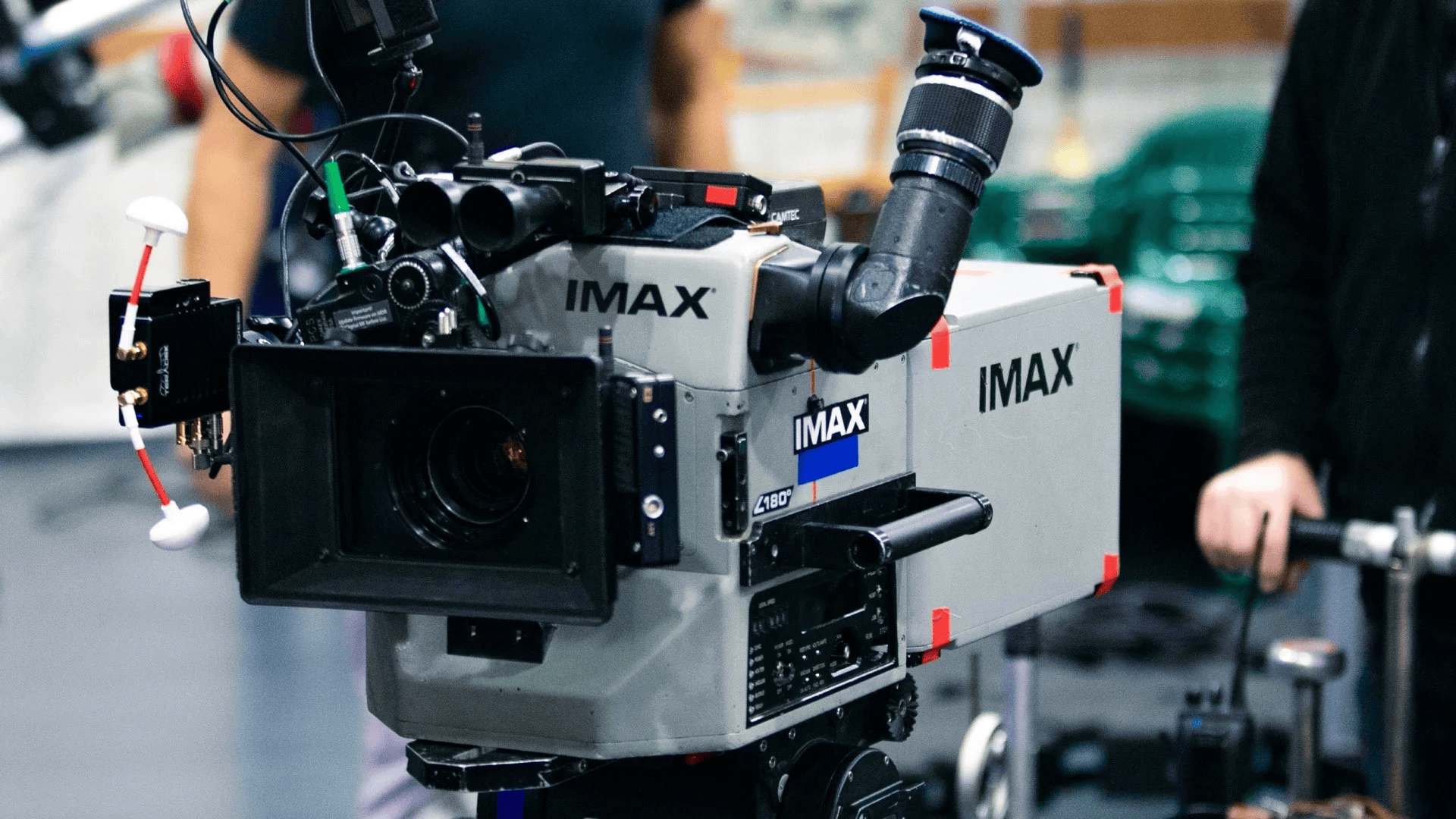
An IMAX film camera is basically a giant analog camera built for motion. Instead of a digital sensor, light from the lens exposes 65mm photographic film one frame at a time.
The clever part is how the film moves. Normal 65mm movie cameras pull film vertically, but an IMAX camera runs it horizontally, allowing each image to stretch across 15 perforations of film. This creates the famous 15/65 IMAX negative, with a frame roughly 10× the area of conventional 35mm film.
At the standard 24 frames every second, the camera rapidly stops the film, holds each frame extremely flat and precisely positioned while it is exposed, then advances to the next frame. One historical IMAX camera moved film at about 336 feet (102 m) per minute.
That enormous image area captures extremely fine detail, which is why IMAX film can remain remarkably sharp even when projected onto a gigantic 1.43:1 screen.
IMAX is called 15/70 in projection because each projected frame is 70mm film spanning 15 perforations—but the camera negative itself is actually 65mm wide.